As EV infrastructure continues to scale, operational visibility is becoming increasingly important.
Organizations today are managing far more than charging stations. Modern operations often span charging infrastructure, vehicles, energy storage systems, solar assets, service workflows, and supporting electrical equipment.
Yet despite this growing complexity, many operational decisions are still made using charger-centric data alone.
Most operators can easily answer questions such as:
- Which charger was used?
- How much energy was delivered?
- When did the session occur?
But a more important question is often much harder to answer:
Which vehicle was actually charging?
As charging networks and energy ecosystems become more interconnected, the ability to connect charging activity to the vehicles it supports is becoming a critical component of operational intelligence.
Why Your Operational Story Shouldn’t End at the Charger

Charging sessions generate valuable information. Energy consumption, charging duration, utilization rates, and site activity all help operators understand how their infrastructure is performing.
However, charging activity rarely exists in isolation.
Every session ultimately supports a vehicle. Without visibility into that relationship, organizations may be missing critical context surrounding fleet utilization, operational readiness, and overall asset performance.
Knowing what happened is useful.
Knowing which vehicle was involved makes that information significantly more actionable.
Operational Intelligence Happens Between Assets
One of the biggest shifts occurring across EV and energy infrastructure is the move away from managing individual assets and toward understanding how assets work together.
Organizations are increasingly looking beyond charger performance alone and focusing on the relationships that drive operational outcomes. Chargers support vehicles. Vehicles operate at sites. Sites consume energy. Service activities influence uptime across the entire environment.
The most valuable insights rarely come from a single asset.
They emerge when organizations can understand how assets interact across the broader operational ecosystem.
This shift is transforming operational visibility from isolated data points into connected intelligence.
Simplifying Vehicle Identification with InControl™
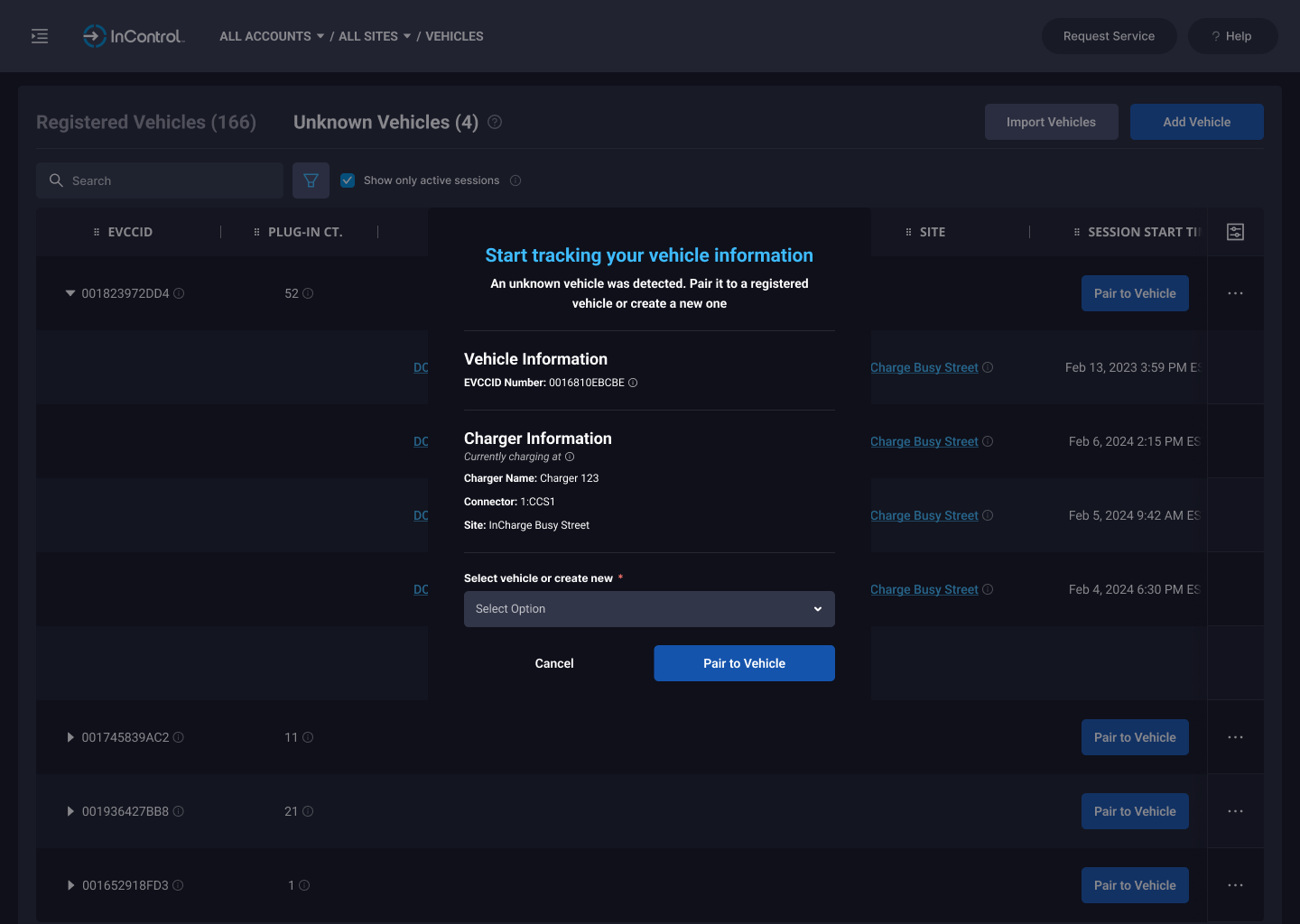
Knowing which vehicle was charging is valuable. Maintaining those vehicle associations over time can be challenging.
As fleets grow and charging activity increases, manually tracking which vehicle belongs to each charging session can quickly become difficult to manage. New vehicles enter service, temporary vehicles appear at sites, and charging activity often occurs before a vehicle has been formally registered within a management platform.
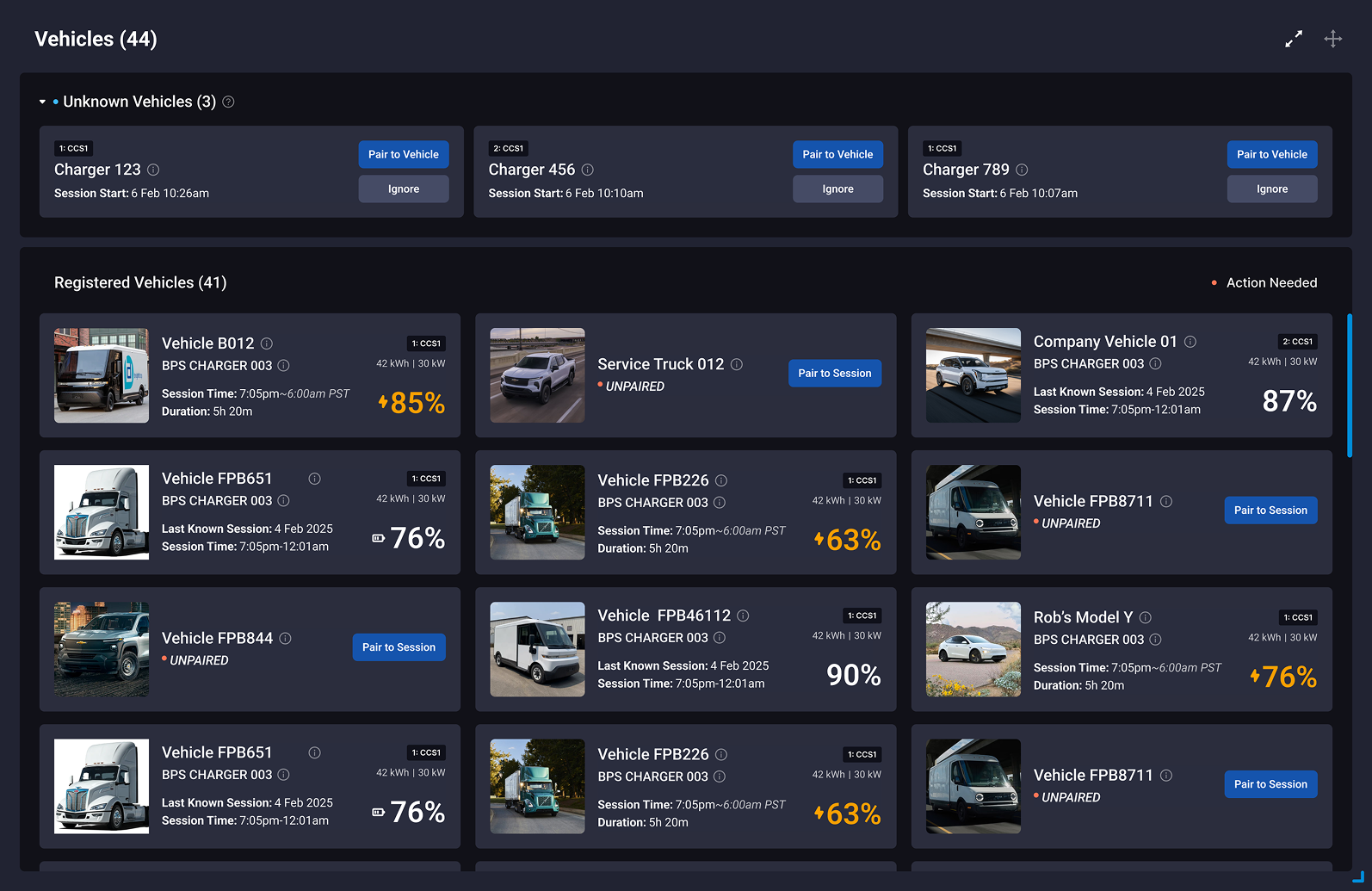
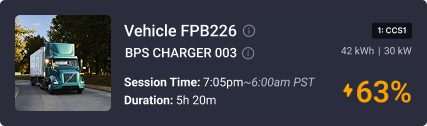
InControl™ simplifies this process by automatically surfacing unknown vehicles detected during charging sessions and providing operators with a guided workflow to resolve them.
From a single interface, operators can quickly associate charging activity with an existing vehicle or create a new vehicle directly withing the pairing process. Historical charging activity can be reviewed during pairing to help validate matches, while built-in safeguards help prevent accidental duplicate associations.
Rather than relying on spreadsheets, manual record keeping, or disconnected systems, operators can maintain accurate vehicle records with significantly less effort.
The result is stronger operational visibility without introducing additional complexity.
What Is an EVCCID?
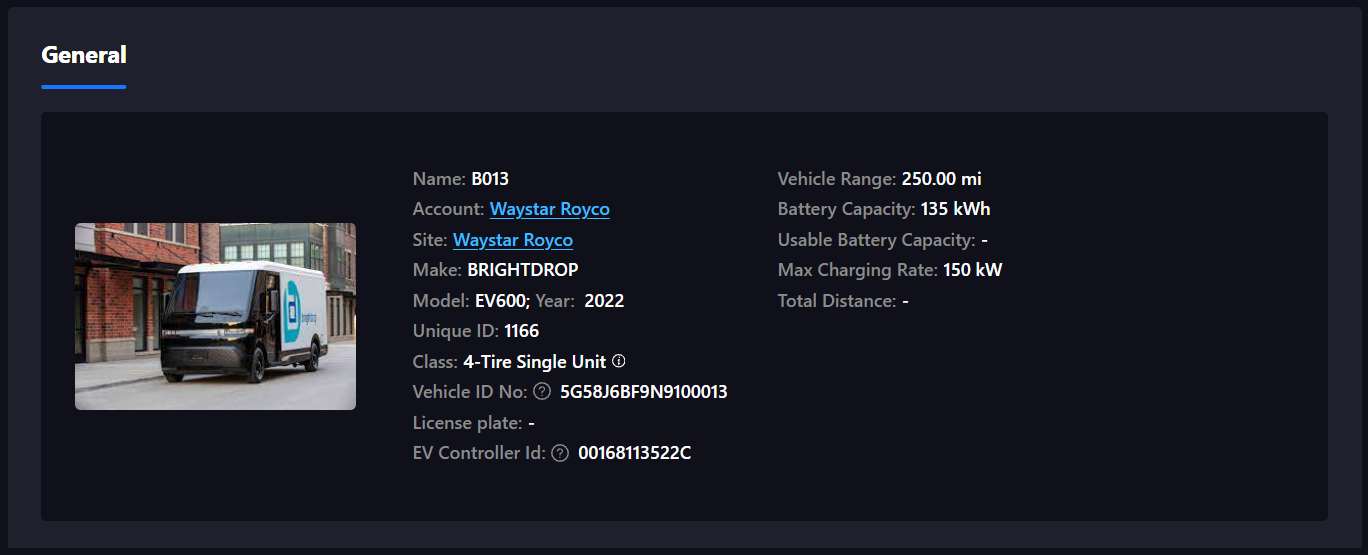
An Electric Vehicle Communication Controller ID (EVCCID) is a unique identifier exchanged during the charging process that can be associated with a specific vehicle.
While operators can often identify which charger or connector was used during a charging session, determining which vehicle was connected is not always straightforward. In many fleet environments, there is no visible identifier linking a vehicle to its charging session after the fact. Unless someone records that information while the vehicle is actively charging, accurately matching historical sessions to individual vehicles can become difficult.
Because the EVCCID remains tied to the vehicle, it provides a reliable method for linking charging activity to the correct asset over time.
This creates a stronger relationship between charging infrastructure and the vehicles it supports, helping operators organize charging data around the assets that matter most.
Once paired, charging activity can be automatically associated with the appropriate vehicle, allowing charging history, reporting, and operational insights to remain connected and easier to analyze.
Note: EVCCID capture is supported on compatible DC chargers when the required charger settings are enabled. If EVCCIDs are not being captured within InControl™, contact InCharge Support to verify your charger configuration.
Building a More Connected Operational Ecosystem
As EV infrastructure continues to mature, organizations are increasingly seeking a centralized view of their operations.
That view extends beyond individual chargers. It includes the vehicles being charged, the sites supporting them, the service workflows maintaining them, and the energy infrastructure powering them.
Vehicle visibility may seem like a small operational detail, but it represents an important connection point within a much larger ecosystem.
Because operational intelligence isn’t created by collecting more data.
It’s created by connecting the assets that already exist across your operation.
Bringing Vehicles Into InControl™
InControl™ helps organizations create stronger operational awareness by connecting charging activity to the vehicles it supports.
Through EVCCID-based vehicle management, operators can build richer visibility across chargers, vehicles, sites, and supporting infrastructure—all within a single operational platform.
As organizations continue expanding their EV and energy infrastructure environments, these connections become increasingly valuable.
Because reliable operations require more than understanding individual assets.
They require understanding how those assets work together.