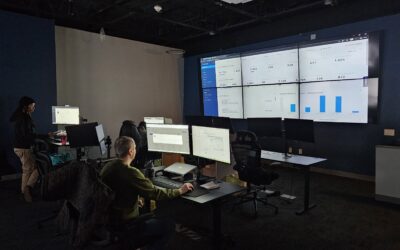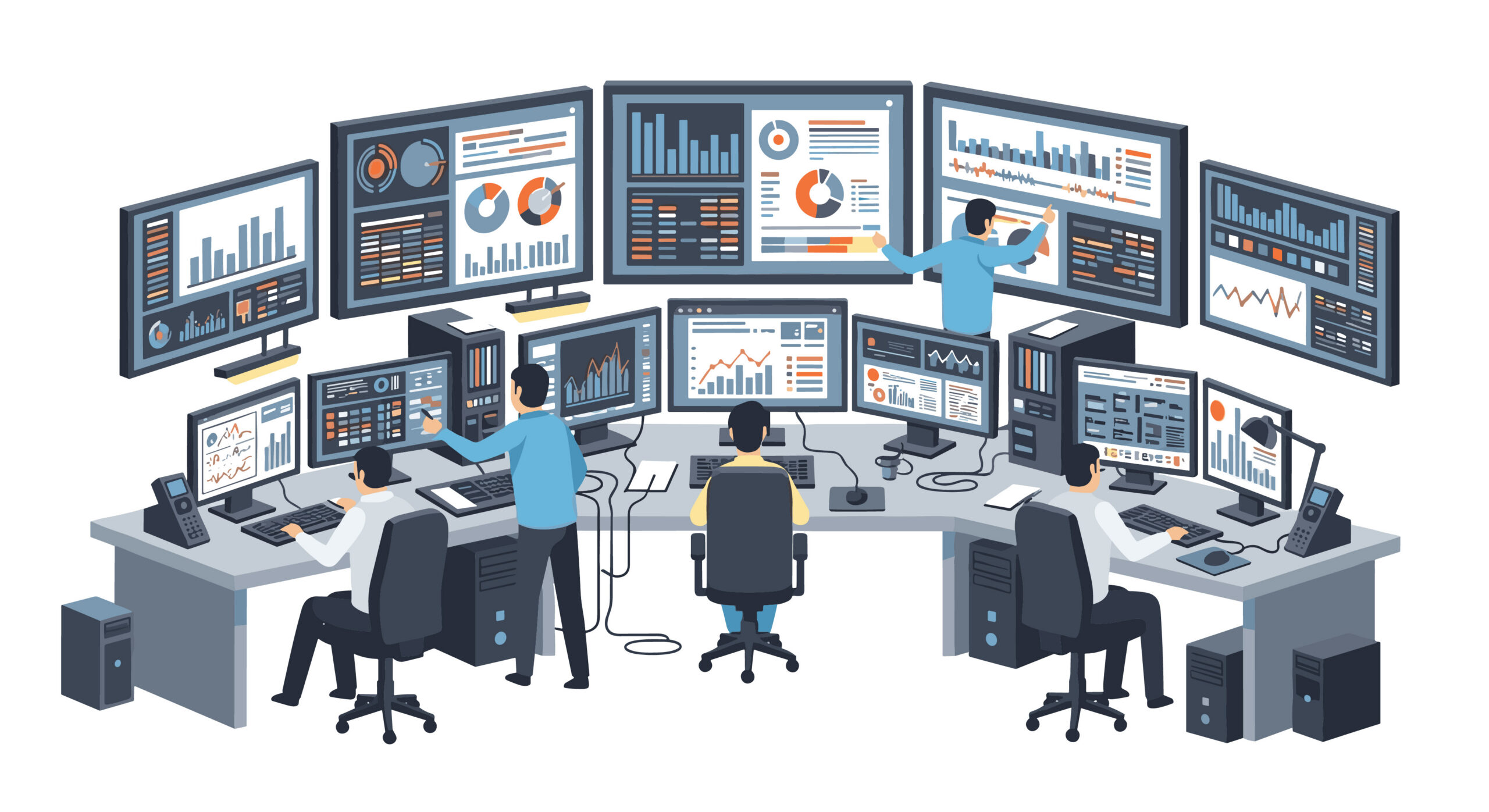
At InCharge Energy, our Network Operations Center (NOC) and Support Operations Center (SOC) work together to ensure every EV charger stays online and every customer feels supported. We asked our teams some key questions to understand how real-time monitoring, proactive diagnostics, and customer-first problem solving set the gold standard for service excellence.
What is the mission of the NOC and SOC?
James Tuppince, Network Operations Center Manager: “The mission of the NOC is to maintain the health of the charger network, ensuring that every unit operates smoothly and efficiently.”
Shannon Hawkins, Technical Support Specialist: “For the SOC, the focus is on the customer experience: solving problems quickly, communicating clearly, and making sure every customer feels valued and confident in the support they receive.”
What does “service excellence” mean in your day-to-day work?
Shannon Hawkins: “Service excellence means resolving issues on the first call or case whenever possible, so customers do not have to return with the same problem. It involves finding solutions quickly and efficiently, while also making sure that customers feel that our support is reliable and professional. For our teams, service excellence is about both technical performance and the customer’s overall experience.”
How do you know when something might be going wrong at a charger site?
James Tuppince: “There are a few early indicators that something could be wrong at a site. If a customer reports a charger that was never fully commissioned, that’s a red flag, as proper commissioning is essential for setting chargers up for success.”
Katrina Kirby, Technical Support Specialist: “If multiple chargers at a single site experience the same issue simultaneously, it may point to a larger electrical infrastructure problem that requires attention. Often, when multiple alerts arrive at the same time, they share a common source, leading to cascading failures.”
How do you prioritize alerts when multiple issues come in at once?
Tanner Dunston, Technical Support Manager: “Our team prioritizes cases based on several factors, including charger type (AC or DC), the industry the customer operates in, how critical the chargers are to their operations, and the specifics of the service agreement in place. This ensures that the most urgent issues are addressed first while still providing timely support across all cases.”
How do you coordinate with field technicians or engineering teams?
Tanner Dunston: “Coordination is key to keeping operations running smoothly. The SOC communicates directly with field technicians through a dispatch team, while the NOC works alongside technicians during commissioning and break-fix visits. Beyond day-to-day interactions, weekly cross-functional meetings between SOC, engineering, and field tech managers help maintain clear communication and ensure all teams are aligned on processes and priorities.”
Can you share an example of a recent “save”?
Shannon Hawkins: “One recent success highlights the impact of proactive monitoring. After a customer reported an isolated issue, our team quickly identified a system-wide problem that was affecting multiple chargers. By resolving it swiftly, we prevented most customers from even noticing a disruption, demonstrating the value of real-time oversight and proactive problem-solving.”
Why does this matter to our customers?
Through the combined efforts of the NOC and SOC, InCharge Energy delivers EV charger service excellence. Real-time monitoring and proactive diagnostics ensure that chargers remain reliable, while a customer-first approach guarantees that problems are solved efficiently, and every interaction reinforces trust. Together, these practices set the gold standard for support in the EV charging industry.