
EV Fleet Charging Solutions for Commercial Fleets
End-to-end solutions to support you from start to scale.
Whether you’re starting out with a pilot or looking to support and scale your existing electric fleet, our solutions are purpose-built to meet your needs every step of the way. Seamlessly transition to electric with our interoperability proven charging stations built to support a variety of use cases, including Vehicle-to-Everything technology.
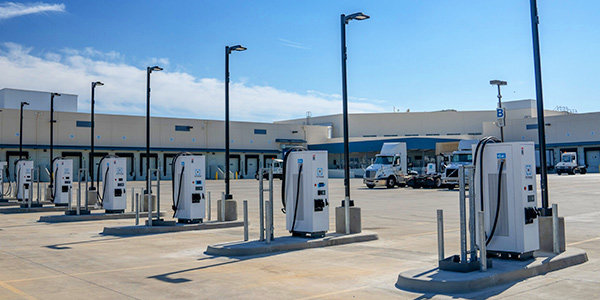
Seamlessly transition to electric with our interoperability proven charging stations built to support a variety of use cases, including Vehicle-to-Everything technology

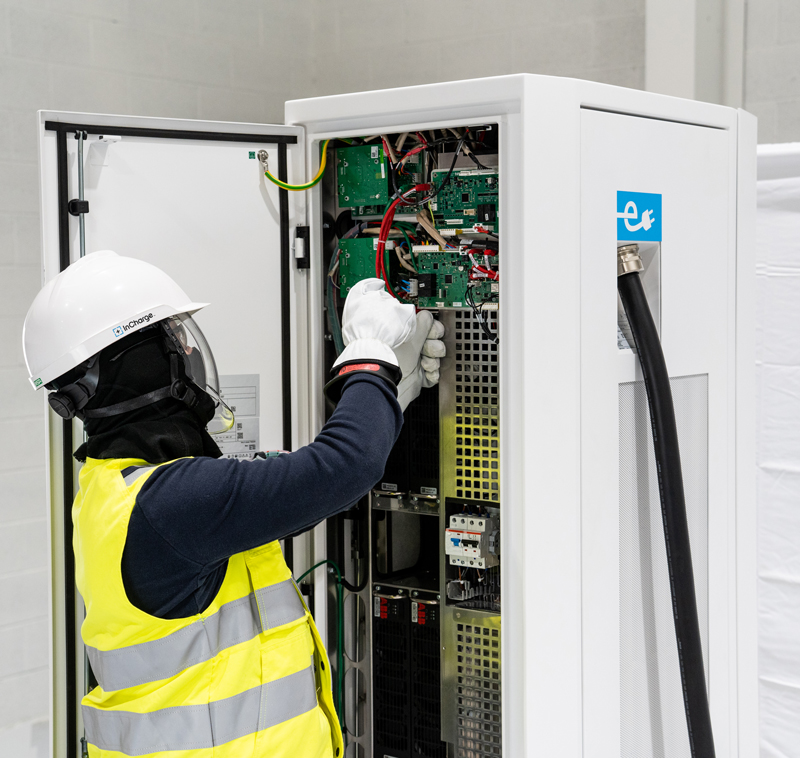
Achieve peace of mind with InService— our maintenance and repair solution powered by our in-house service team, strategically located at hubs across North America for prompt, reliable service when you need it.

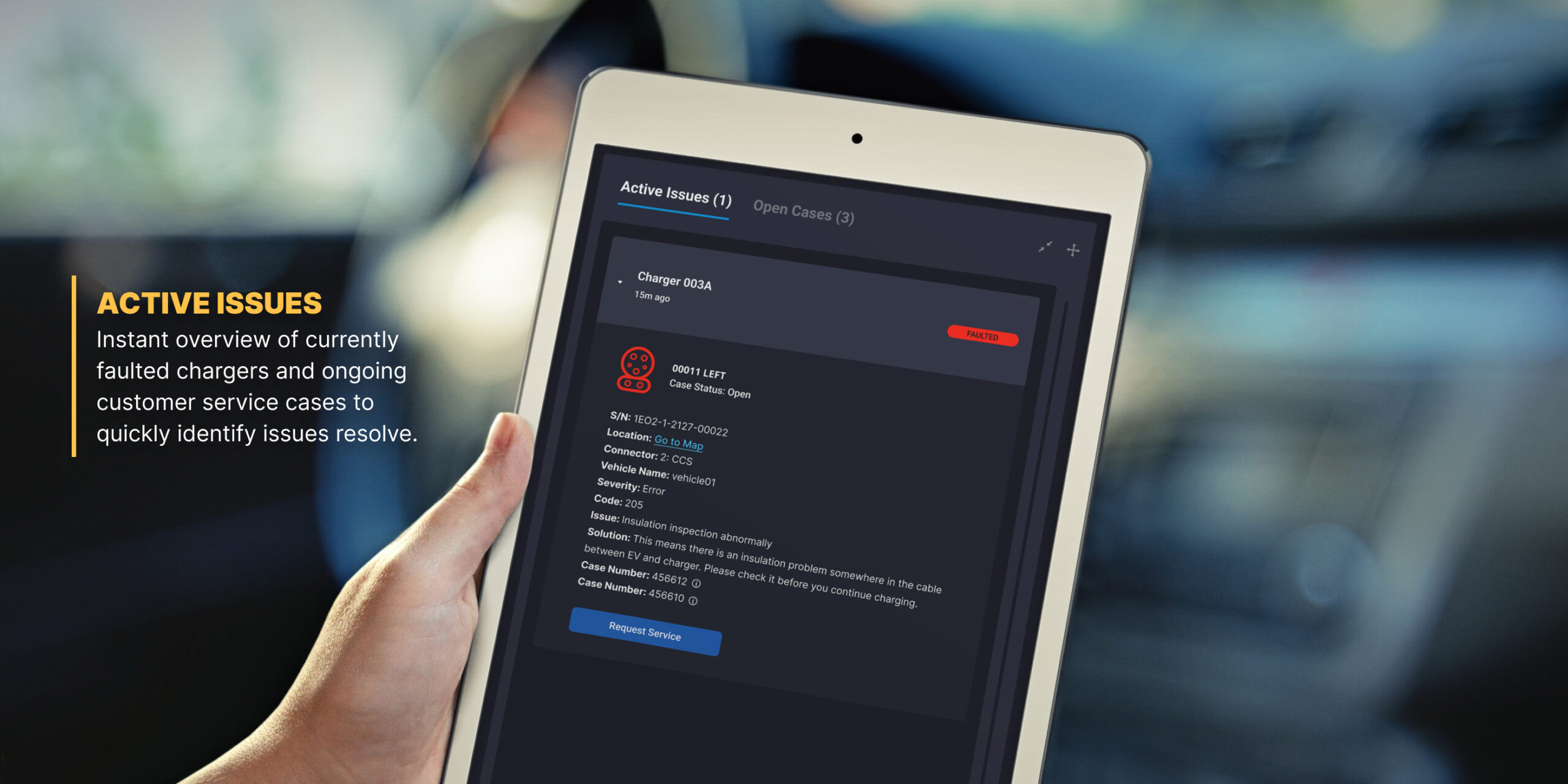
Optimize operations and minimize costs in with InControl, our robust charge management and maintenance software solution.

Right-size your spend and optimize your investment with flexible financing options, plus leverage expert support with grants and incentives.
Industry-Specific EV Fleet Charging Solutions
No two fleets operate the same way, which means charging requirements can vary significantly based on vehicle type, route structure, dwell time, and operational priorities. Our effective EV fleet charging solutions are designed around real-world fleet operations to help organizations improve uptime, manage energy usage, and support long-term scalability.
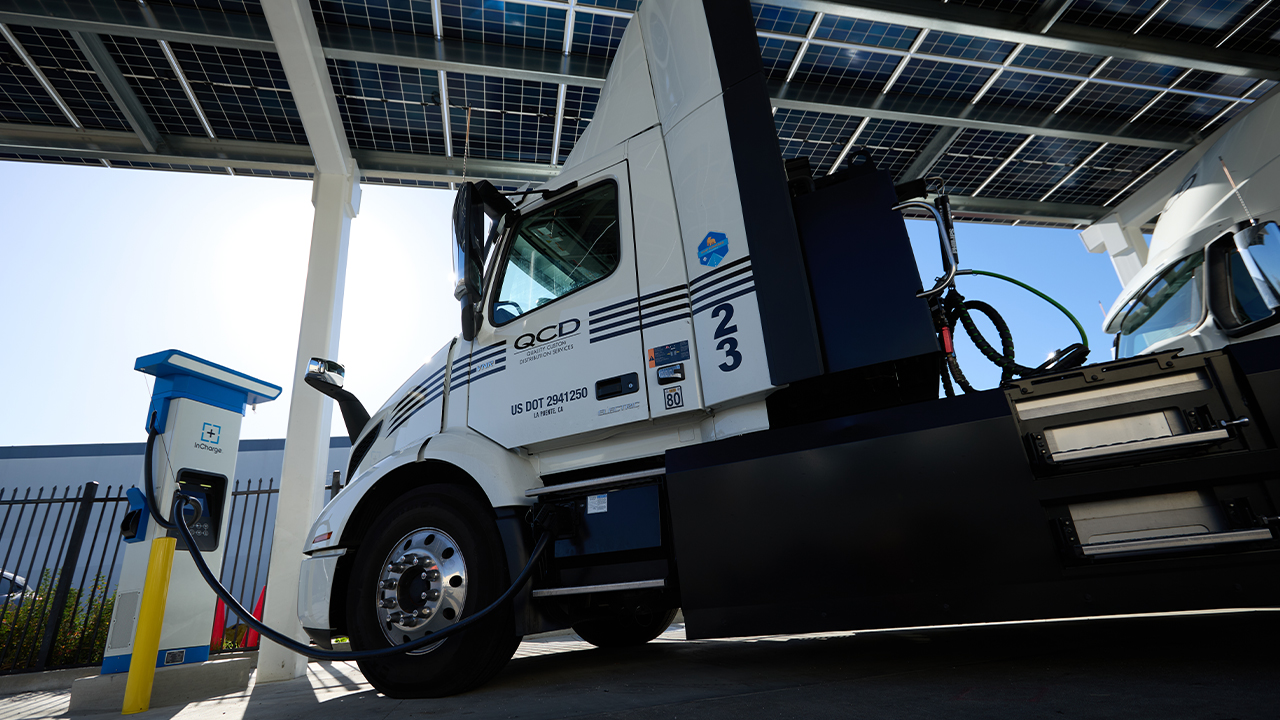
Delivery & Logistics Fleets
Delivery and logistics operators often require a combination of overnight charging and rapid turnaround support. Many organizations implementing EV charging for delivery fleets rely on Level 2 charging for overnight depot operations paired with DC fast charging for high-utilization routes and schedule flexibility.
School Bus Fleets
School districts benefit from predictable routes and scheduled dwell times that support efficient depot charging strategies. Purpose-built school bus EV charging infrastructure helps transportation teams align charging schedules with operational windows while supporting future fleet expansion.
Municipal & Government Fleets
Municipal fleet electrification projects often involve mixed vehicle types, phased deployments, and coordination across departments. Flexible EV fleet charging infrastructure helps public agencies scale while maintaining operational continuity and managing infrastructure costs.
Dealership Charging
Effective dealership EV charging solutions must support both inventory charging and customer-facing charging experiences. Visibility into charger availability and usage is essential for maintaining day-to-day dealership operations.
Autonomous & Mobility Fleets
Emerging mobility operations place even greater demands on uptime and reliability. Autonomous fleet charging environments often require rapid charging, redundancy planning, and centralized monitoring to support continuous operation with minimal disruption.
Across every industry, factors such as dwell time, route predictability, fleet scaling, and power availability directly influence charger selection and deployment strategy. That’s why InCharge Energy delivers more than charging equipment alone. Our solutions combine intelligent software, ongoing service, financing support, and interoperable hardware to help fleets simplify electrification from deployment through long-term operation.
Across every industry, factors such as dwell time, route predictability, fleet scaling, and power availability directly influence charger selection and deployment strategy. That’s why InCharge Energy delivers more than charging equipment alone. Our solutions combine intelligent software, ongoing service, financing support, and interoperable hardware to help fleets simplify electrification from deployment through long-term operation.
Our Partners & Customers










Level 2 vs. DC Fast Charging for Fleets
Choosing the right charging mix is one of the most important decisions when deploying EV charging infrastructure for commercial fleets. The ideal strategy depends on vehicle utilization, route schedules, dwell times, and future growth plans.
Level 2 charging uses AC power and is often the most cost-effective solution for fleets with predictable schedules and longer parking windows. Because vehicles can charge overnight or during extended dwell periods, Level 2 systems work well for depot environments, employee fleets, and operations scaling large numbers of vehicles. Many organizations use Level 2 charging as the foundation of their electric fleet charging strategy due to its scalability and lower infrastructure costs.
DC fast charging, or DCFC, supports much faster charging speeds and is commonly used for high-utilization vehicles that require quick turnaround times. Fleets operating on tight delivery schedules or continuous routes often depend on DC fast charging to minimize downtime and maximize vehicle availability.
For many organizations, the most effective approach is a hybrid strategy that combines both charging types. Level 2 charging can support daily base-load charging needs, while DCFC handles peak demand and route-based operational requirements.
At InCharge Energy, we help organizations evaluate charger mix, energy demand, and operational workflows to design scalable commercial EV charging solutions that align with long-term fleet goals.

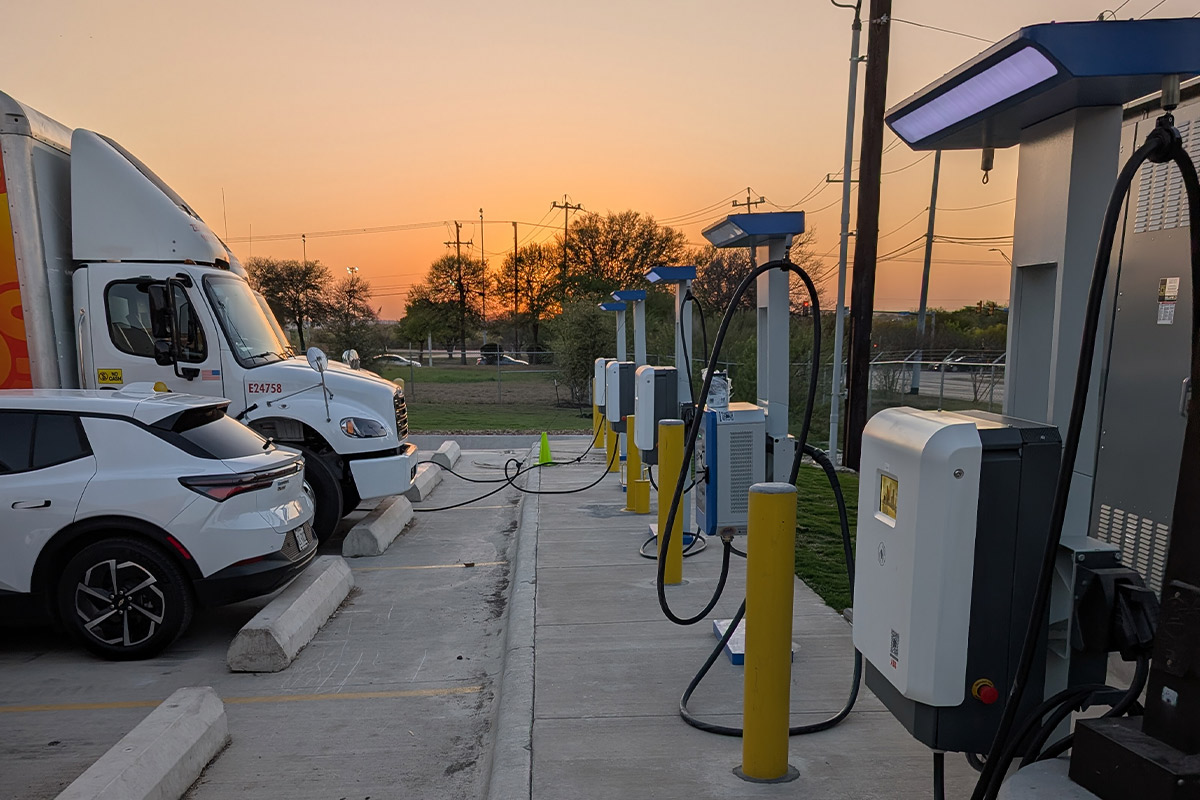
Key Considerations When Building EV Charging Infrastructure
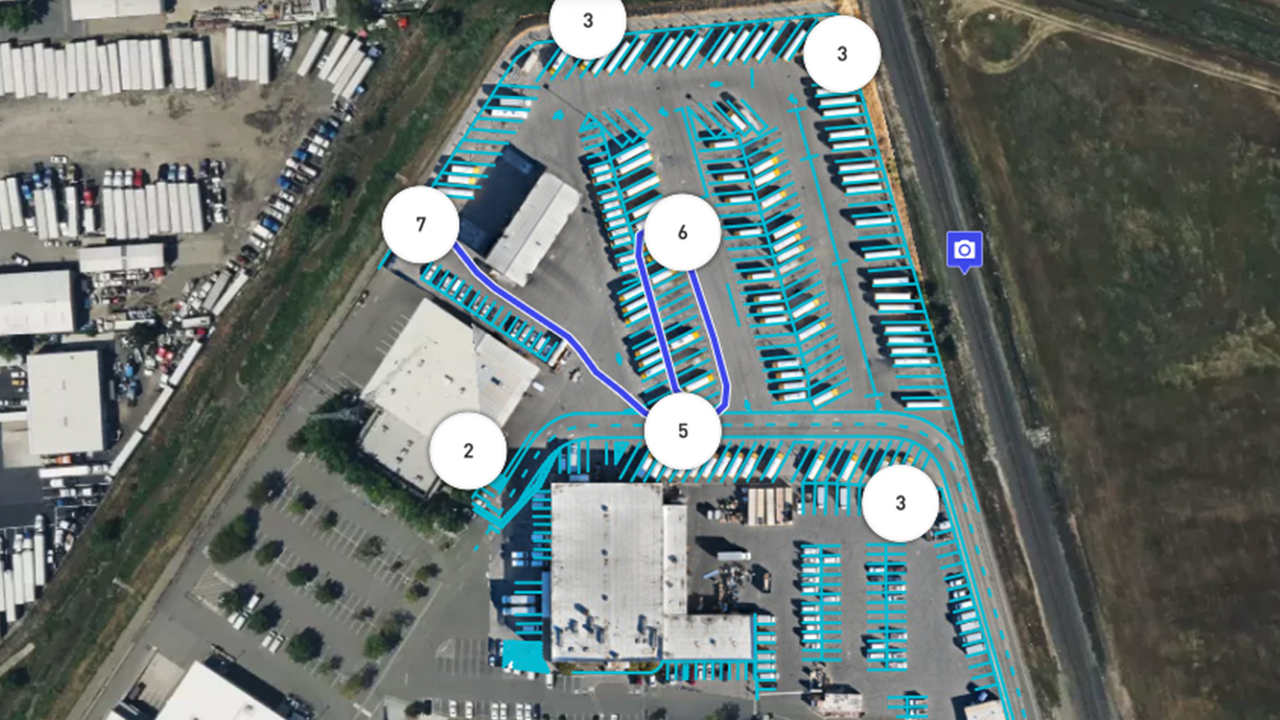
Successful electrification starts with strategic planning. Building scalable EV fleet infrastructure requires more than installing chargers. Fleets need to evaluate operational workflows, utility coordination, site layout, and long-term energy requirements before deployment begins.
Key considerations include:
- Electrical capacity and utility coordination: Available power, utility timelines, and future expansion requirements all impact deployment strategy and scalability.
- Site layout and charger placement: Charger locations should support parking flow, driver access, dwell time, and maintenance operations while minimizing disruption.
- Energy management: Demand charges and fluctuating energy costs can significantly impact operating expenses without intelligent load management and software visibility.
- Long-term scalability: Planning only for short-term pilot programs can create costly infrastructure upgrades as fleets expand.
- Operational visibility and maintenance: Software integration, proactive maintenance planning, and centralized oversight help improve uptime and operational efficiency.
Future-proof your operation with proactive planning and ongoing support.
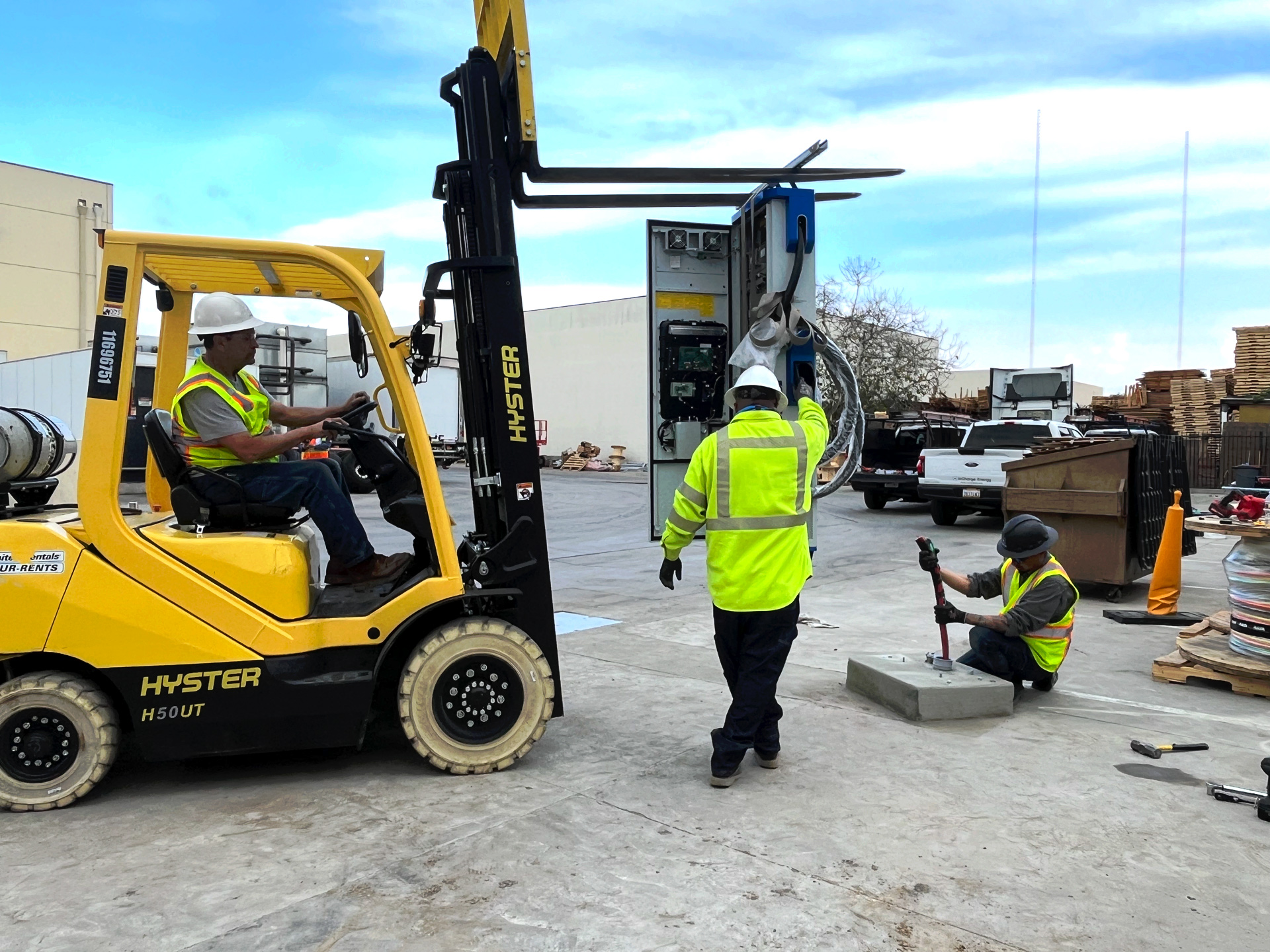
Navigate the evolving zero-emission fleet landscape with ease – with the help of our industry experts. From site assessments to utility coordination to ongoing site monitoring and maintenance, our team of experts can help you build – and maintain – your zero-emission fleet now and support your scale in the future.
-
Site Assessment: Virtual or In-person
-
Fleet operations analysis
-
Vehicle compatibility review
-
Recommend charger selection and strategic placement
-
Utility coordination to minimize delays
Optimize your investment with flexible ownership options and grant support.
Charging-as-a-Service
Enjoy lower upfront costs and lower, predictable monthly payments. By shifting capex to opex spending for electrification, funds can be used for other priorities.
Financed
Take full ownership of your operation with our holistic financial solutions for electric vehicle (EV) fleets and charging infrastructure.
Grants & Incentives
Our team of experts can help you identify available grants and funding based on geography, electrification goals, and use case – to augment budgeted infrastructure spend.


Charge Management & Maintenance Software
Get visibility into your entire operation from a single source of truth
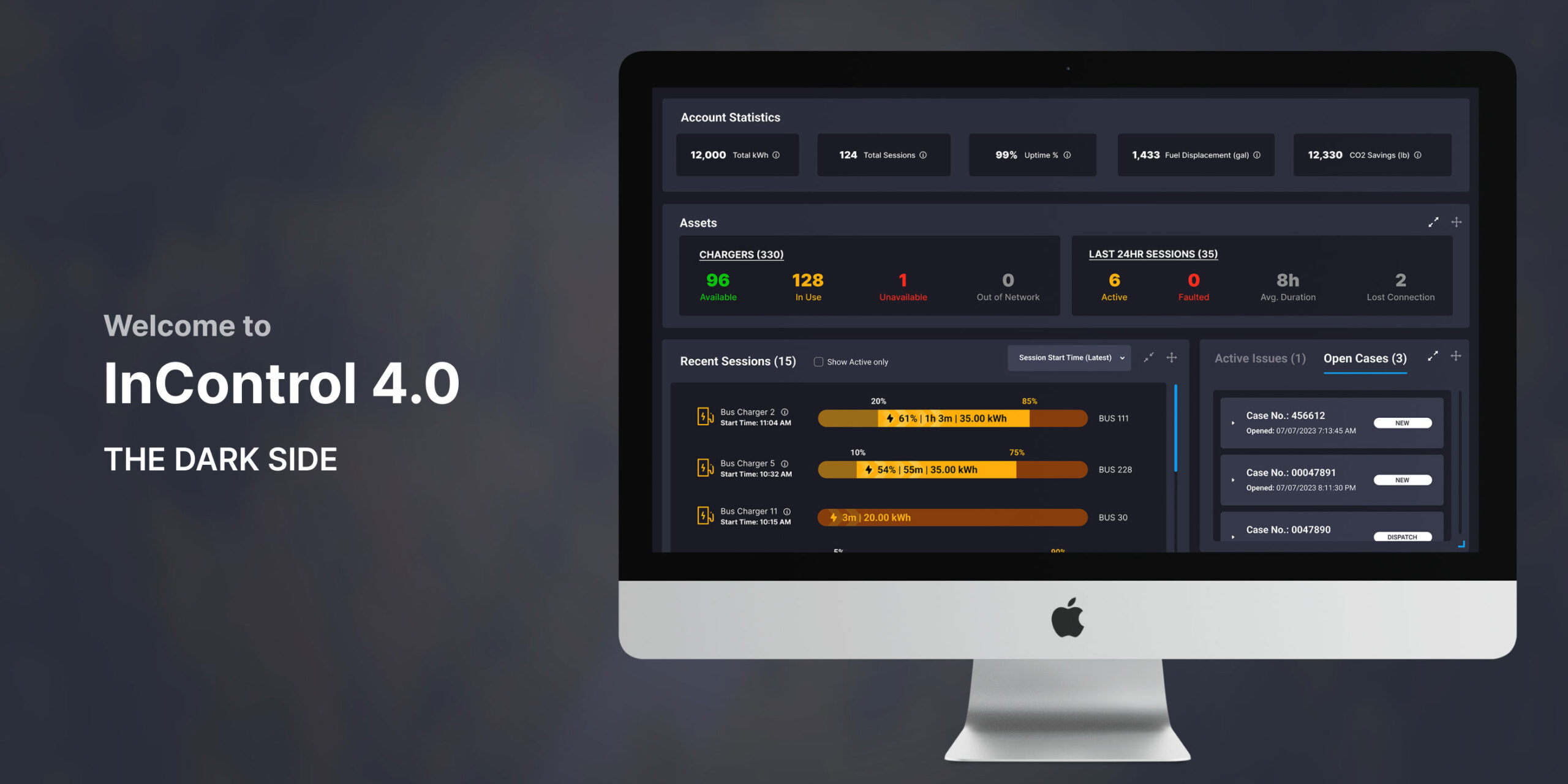
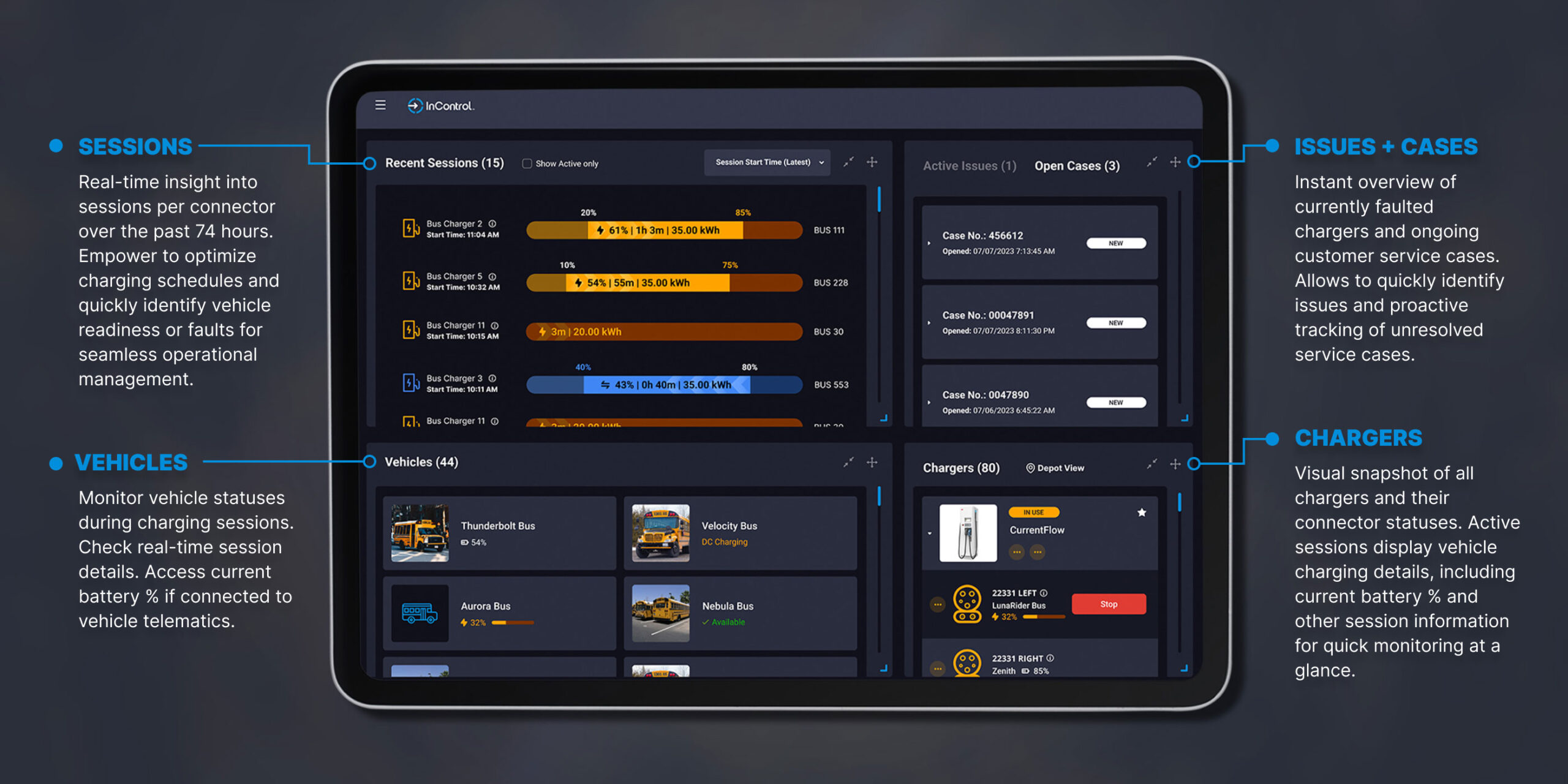
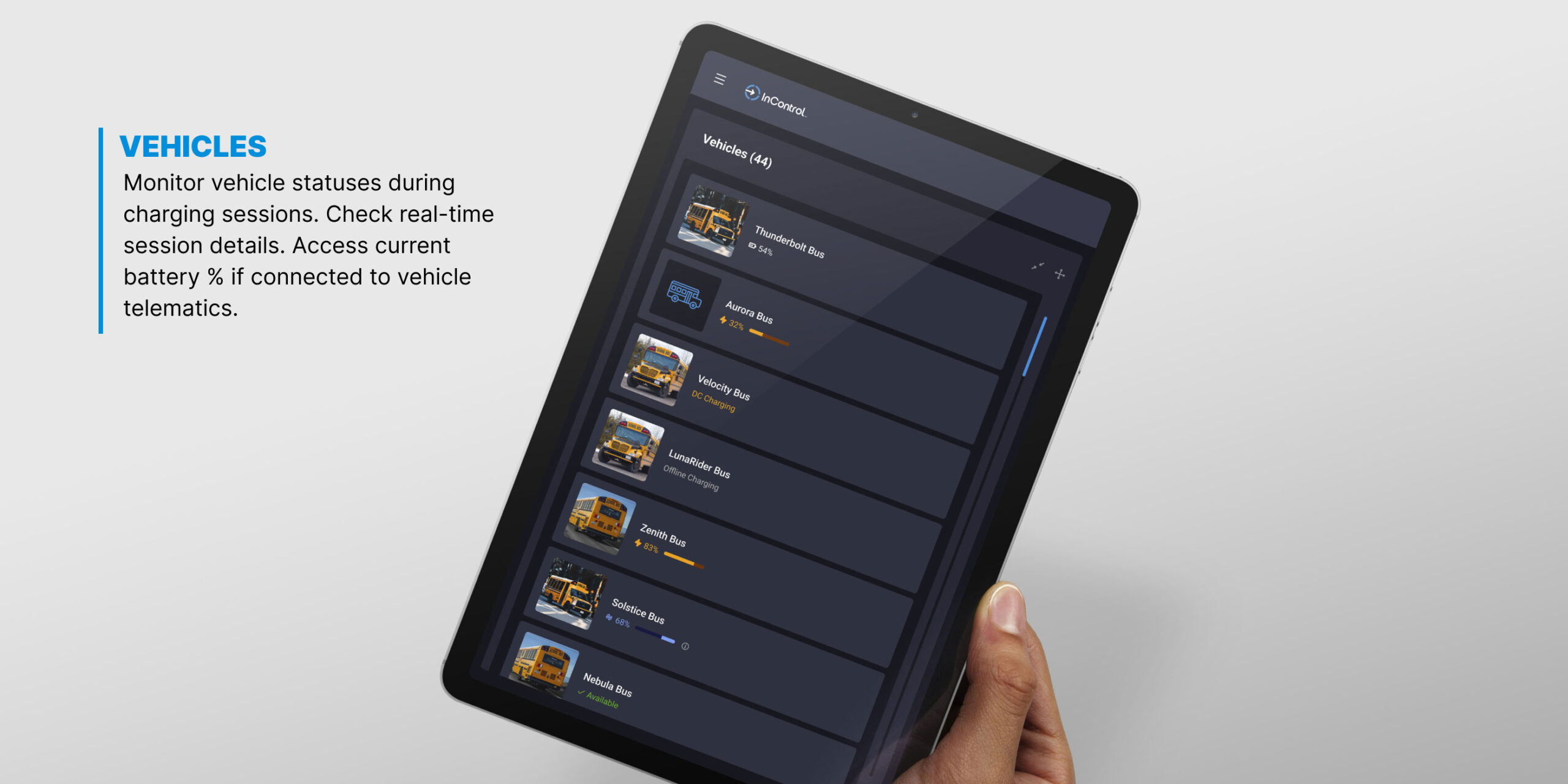
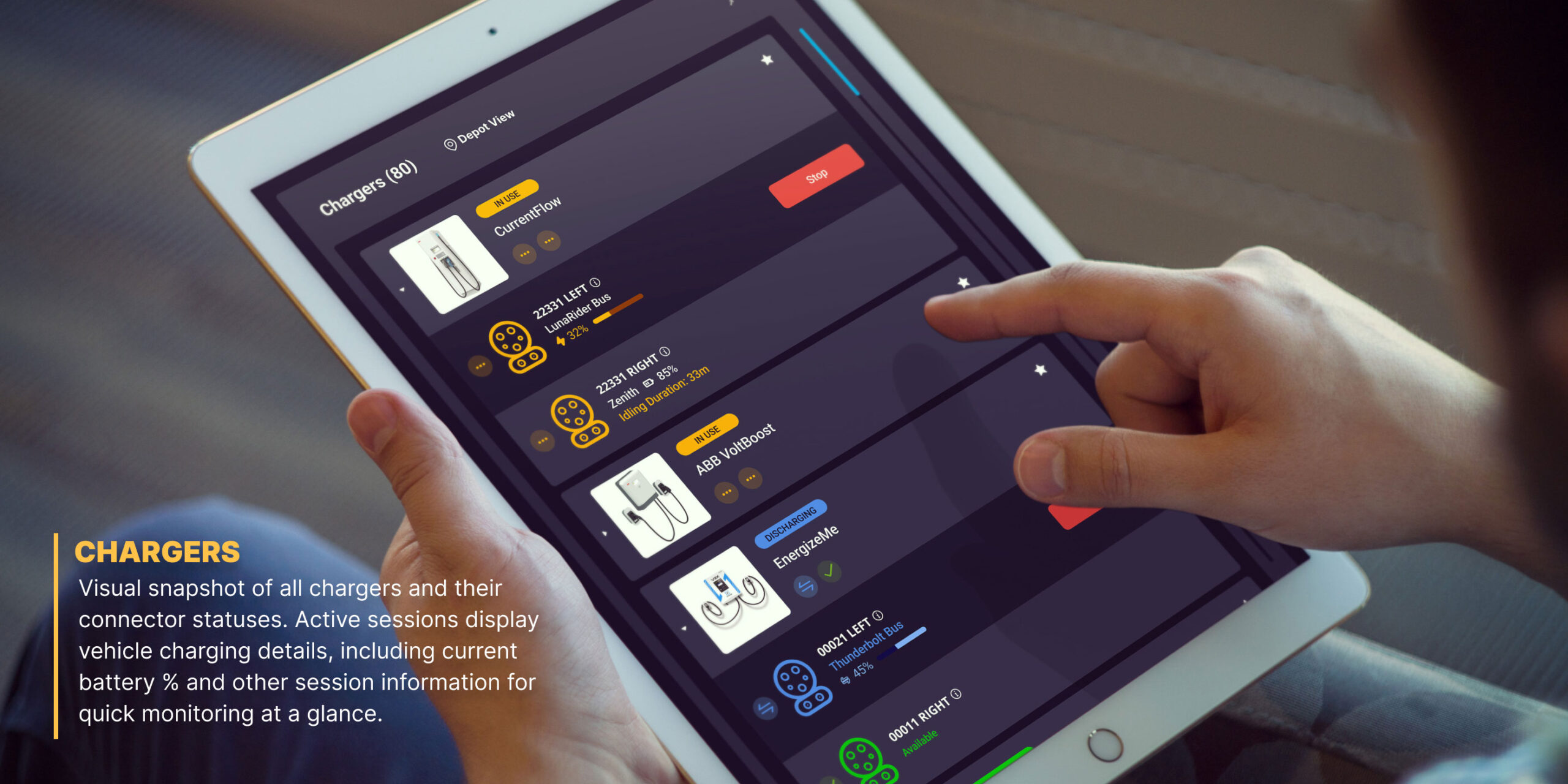
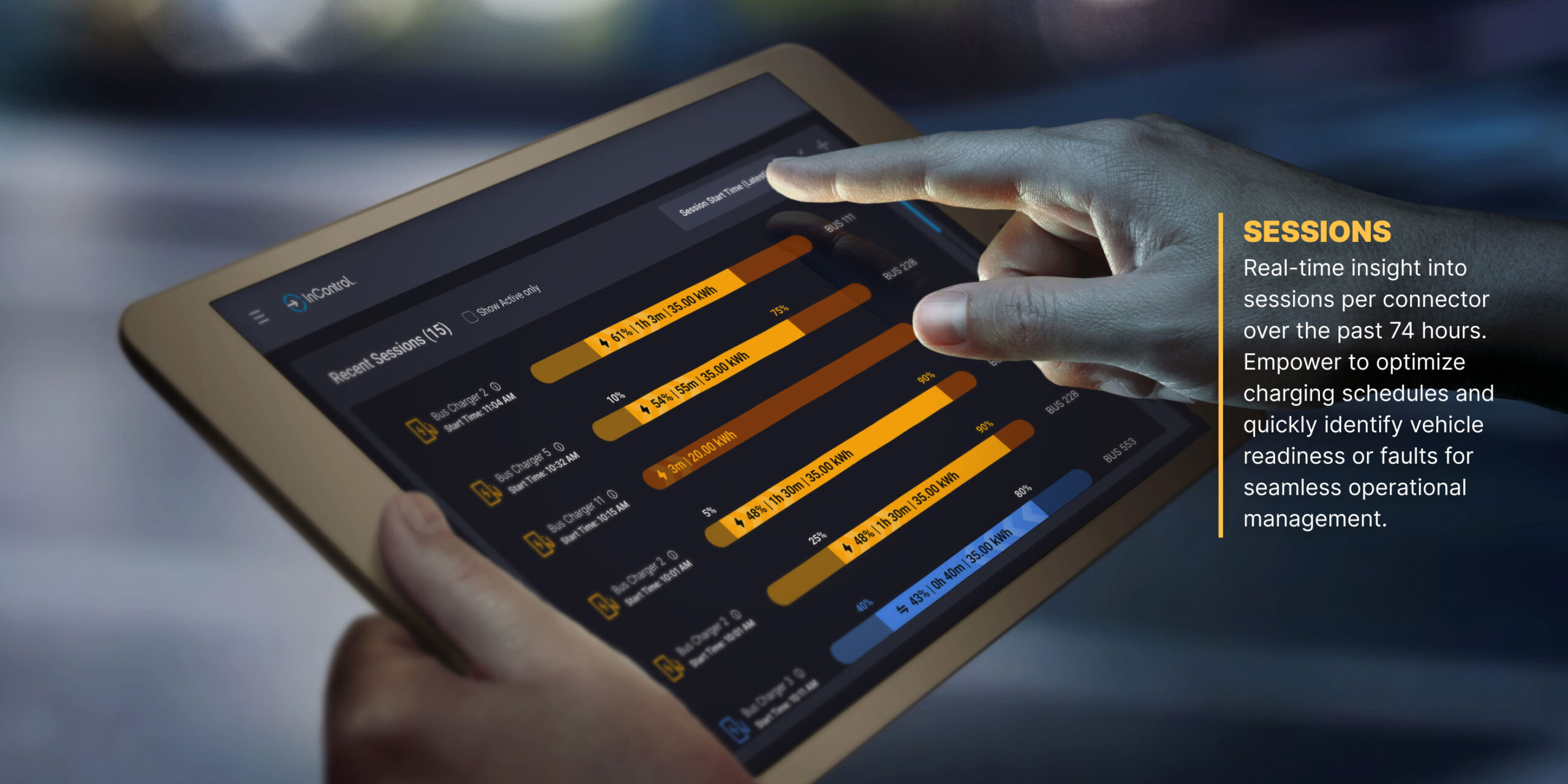
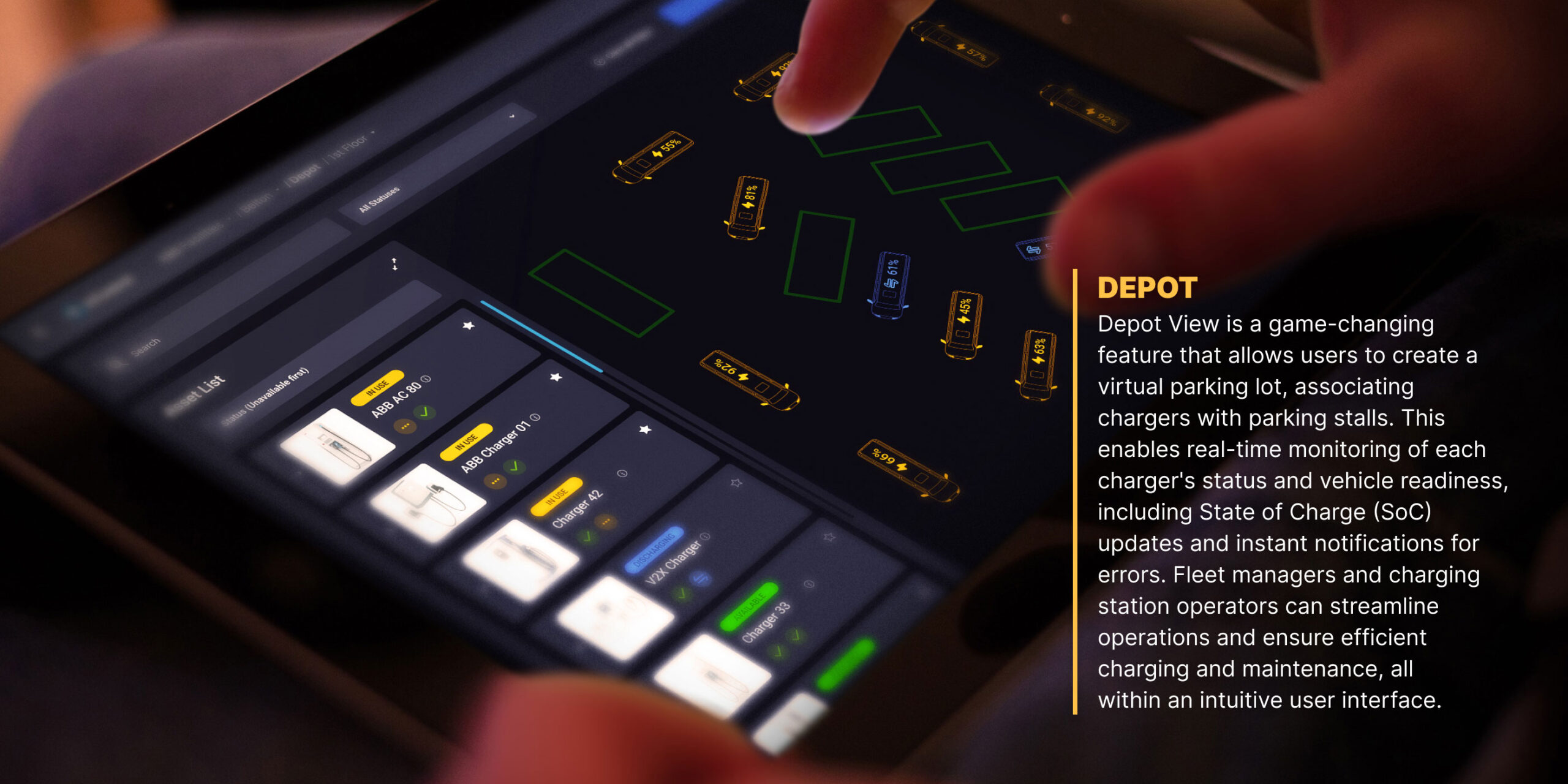
InCharge Energy’s proprietary InControl fleet charge management and maintenance software (CMMS) enables fleet managers to proactively optimize their electric fleet from a single easy-to-use platform. InControl integrates with your existing fleet management systems, ensuring seamless deployment and smooth ongoing operations.
- Open API and secure: For seamless, trustworthy integrations with existing systems and telematics
- Smart Load management: Minimize charging costs, maximize charging within available power constraints
- Personalized Depot view: Fleet depot-specific platform view makes oversight even simpler
- Telematics and other integrations: Seamless and scalable, InControl supports existing and future integrations with open APIs and robust security in place, for an easy transition and easier management
How InCharge Energy Supports Fleet Electrification at Scale
Our end-to-end ecosystem combines interoperable charging hardware, intelligent software, ongoing service, and flexible financing into a single integrated solution. From Level 2 and DC fast charging systems to advanced energy management and Vehicle-to-Everything capabilities, our solutions are built to support complex fleet operations across North America.
Our proprietary software platform InControl gives fleet operators centralized visibility into charger status, energy usage, maintenance activity, and operational performance. Intelligent load management tools help optimize charging schedules and reduce energy costs while supporting scalable growth.
Our in-house InService team helps fleets maintain uptime with proactive maintenance, responsive repairs, and ongoing operational support delivered by strategically located technicians across North America.
We also help organizations simplify deployment through financing support, grant guidance, and infrastructure planning expertise. From new EV charging solutions to expanding existing operations, we help fleets manage the complexity of electrification with greater operational visibility and control.
Electrification is a long-term operational transformation. InCharge Energy helps simplify that transition with scalable solutions built to support performance, reliability, and growth.
FAQ About EV Charging for Fleets
How many EV chargers does my fleet need?
The number of chargers required depends on fleet size, duty cycles, dwell time, route schedules, and charging speed requirements. Some fleets can support multiple vehicles per EV charger through staggered charging schedules, while high-utilization operations may require additional capacity to maintain uptime.
How long does it take to charge a fleet vehicle?
Charging time depends on battery size, charger type, and vehicle usage. Level 2 charging typically supports overnight charging over several hours, while DC fast charging can significantly reduce charging time for vehicles requiring rapid turnaround.
What incentives are available for fleet electrification?
Federal, state, and utility programs may provide incentives for charging infrastructure deployment and vehicle electrification. Availability varies by geography and project type, with states like California often offering substantial funding opportunities for fleet operators.
Can EV charging infrastructure scale over time?
Yes. Modular charging systems, intelligent software platforms, and phased deployment strategies help organizations scale infrastructure as fleets grow. Planning for future capacity during initial deployment can help reduce long-term costs and operational disruption.
We make EV charging simple, reliable and scalable.
Whether your business is starting to electrify or expanding its electric fleet, we’re here to support your path to electrification.