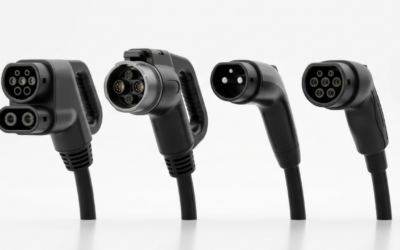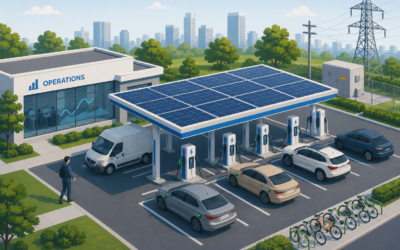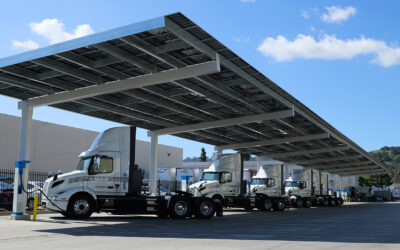
As electric fleets, high-power chargers, solar projects, and facility energy demands grow, organizations need better ways to manage electricity. A battery energy storage system can help by storing power when it is available and releasing it when a site needs it most.
What is a battery energy storage system (BESS)? At a basic level, it’s a group of batteries, controls, and power equipment that stores electrical energy for later use. It does not create electricity the way a solar array or generator does. Instead, it saves electricity so a fleet depot, charging site, campus, or facility can use that stored energy at the right time.
For commercial, fleet, industrial, and institutional sites, BESS is becoming a practical part of long-term energy planning. It can help manage demand charges, support EV charging infrastructure, add backup power, and improve energy resilience when the grid is strained or unavailable.
InCharge Energy helps organizations think through energy storage as part of a broader site strategy. That may include EV charging, electrical infrastructure, solar, microgrids, software, and long-term operations and maintenance. The goal is to keep energy systems working in a way that supports uptime, vehicle readiness, and daily operations.
Why Are Battery Energy Storage Systems Important?
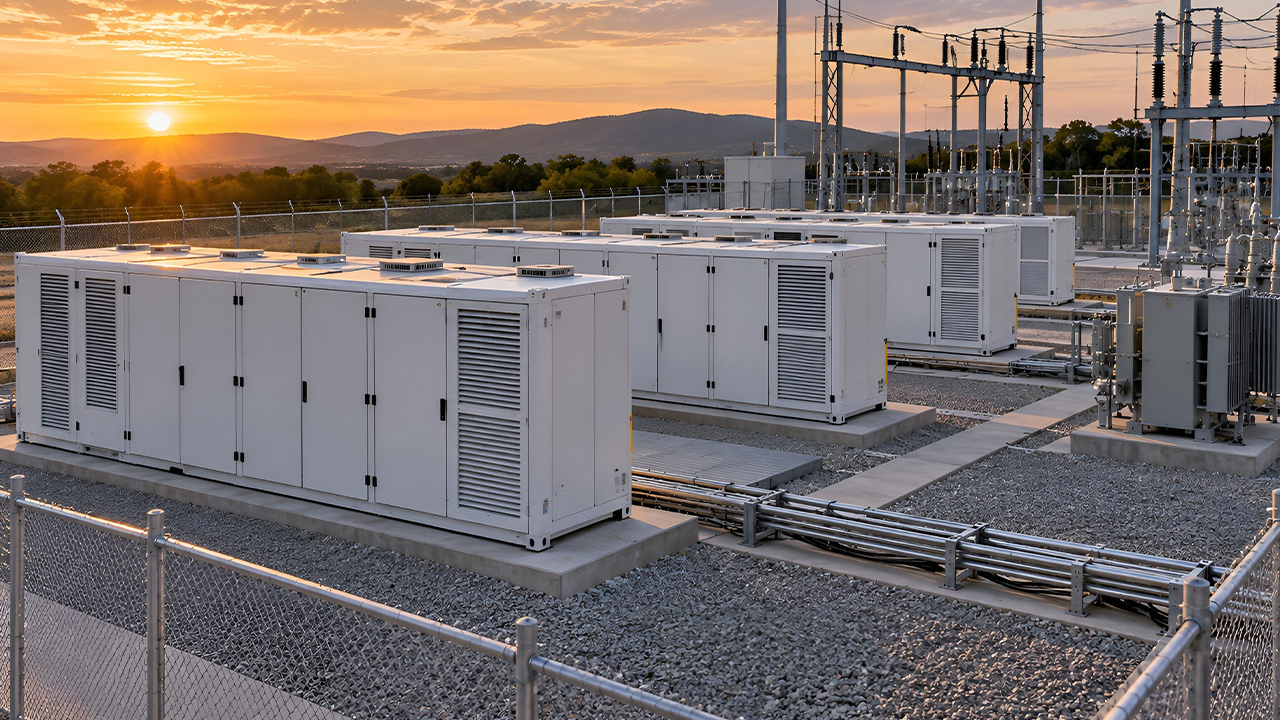
A battery energy storage system includes more than batteries. It also uses power conversion equipment, controls, monitoring tools, and safety systems. These parts work together so the system can charge, store power safely, discharge power, and communicate with other energy assets.
This makes energy storage useful for organizations that need more control over power use. A fleet depot may charge batteries during lower-demand periods, then discharge that energy during peak charging hours. A public charging site may use stored power to support chargers when the available utility connection is limited.
Energy storage systems are often part of a broader energy management plan. They can work with EV charging, solar, microgrids, building loads, and utility rate strategies. For many organizations, battery storage is part of planning for growth, resilience, and future energy needs.
How Does a Battery Energy Storage System Work?
A battery storage system works through a simple cycle: charge, store, and discharge. During the charging stage, the system receives electricity from the utility grid, solar power, or another connected source. The system stores that power as chemical energy inside the battery cells.
During the storage stage, the system holds the energy until the site needs it. Controls and monitoring tools track system conditions, state of charge, temperature, available capacity, and operating limits. During discharge, the system sends electricity back to the facility, charger, or connected load.
This may happen during peak demand, a grid outage, a high-use charging window, or a period when utility rates are higher. Intelligent controls help decide when to charge and when to discharge based on the site plan.
For EV charging sites, this cycle can support load balancing. High-power charging creates short periods of heavy electrical demand. Battery storage can help smooth those peaks by adding power when chargers need it most. This can reduce strain on the electrical system and help the site operate more predictably.
Key Components of a Battery Energy Storage System
Battery storage systems include several major components. Battery cells are the basic storage units inside the system. Cells are grouped into modules, and modules are grouped into larger racks or cabinets. Lithium-ion batteries are common in many BESS projects because they offer strong energy density and fast response. Other battery types, including flow batteries, may also be used based on duration, site conditions, and project goals.
The power conversion system, often called PCS, controls how electricity moves between the batteries and the site. Batteries store direct current power. Most facilities and grid connections use alternating current power. Inverters convert power between those forms so the system can charge and discharge correctly.
A battery management system monitors battery health, temperature, voltage, state of charge, and safe operating limits. Energy management software helps coordinate the BESS with site loads, EV chargers, solar, utility signals, and operating goals.
Monitoring platforms can provide visibility into system performance, alerts, diagnostics, and maintenance needs. For fleet and commercial charging sites, this visibility matters because energy performance is tied to uptime and service readiness. Thermal management and safety systems help batteries operate within safe limits and meet site-specific code requirements.
Benefits of Battery Energy Storage Systems
Organizations invest in battery energy storage systems for several reasons. The exact value depends on the site, utility rate structure, load profile, and operating goals. In many commercial and fleet settings, the benefits center on cost control, resilience, and flexibility.
BESS can help reduce energy costs through peak shaving and load shifting. Peak shaving means discharging stored power during periods of high demand so a site can reduce its peak load. Load shifting means charging batteries during lower-cost periods and using stored power when utility rates or demand charges are higher.
Battery storage can also provide backup power for selected loads when the grid is unavailable. In many cases, BESS is designed to support critical systems, not every load at a site. The right scope depends on the size of the system, battery capacity, discharge rate, and the loads the organization needs to support.
BESS can support renewable energy integration by storing solar energy that a site does not use right away. Instead of sending excess generation back to the grid or reducing solar output, the site can store energy and use it later. This can improve the value of renewable energy sources and support ESG and sustainability goals.
Energy needs change as organizations add vehicles, expand facilities, install chargers, or adopt new energy strategies. Battery storage can provide added flexibility while an organization evaluates utility upgrades, solar, microgrid options, future fleet expansion, or other long-term energy plans.
How Battery Energy Storage Systems Support EV Charging Infrastructure
Battery energy storage is especially important for commercial EV charging infrastructure. Charging can create high power demand, and many sites were not built with large electric fleets or DC Fast Charging in mind. BESS can help bridge the gap between available electrical capacity and charging needs.
DC Fast Charging, also called DCFC, can be valuable for fleets with fixed schedules, limited dwell time, and high utilization. Those same charging needs can place heavy demand on the electrical system. Battery storage can support DCFC by discharging during high-use charging periods, reducing peak demand, and helping chargers operate within site limits.
A battery storage system may also help delay or reduce some utility upgrade needs. If the grid connection cannot support every future charging load right away, battery storage may provide another path to phased growth. This does not remove the need for careful electrical planning, but it can give organizations more options.
For fleet electrification, charger uptime is tied to operations. If vehicles are not charged, routes, service windows, and productivity can be affected. BESS can support charger reliability by helping manage load, adding backup power for critical charging needs, and giving operators more control over energy use.
Battery Energy Storage Systems and Microgrids
A microgrid is a local energy system that can manage connected resources, such as solar, battery storage, generators, utility power, and facility loads. In some designs, a microgrid can separate from the main grid and operate selected loads independently during an outage.
Battery energy storage systems play an important role in microgrids because they provide stored power and fast response. BESS can help balance power supply and demand, store solar generation, and support critical loads during grid interruptions.
For fleets and critical infrastructure, microgrids can add resilience. A transit agency, school bus fleet, municipal facility, industrial site, or public charging network may need a power strategy that supports operations during grid stress. By combining distributed energy resources, controls, and storage, organizations can create a more flexible energy plan.
Common Commercial Applications for a BESS
BESS can support many commercial and fleet environments. The best use case depends on site load, charging demand, utility costs, resilience needs, and future growth plans.
Fleet operations may use BESS to support depot charging, manage peak demand, and improve vehicle readiness. Last-mile delivery fleets, service fleets, and autonomous vehicle operations may benefit when charging schedules are tight and downtime affects revenue or service performance.
Transit agencies and public transportation systems may use battery storage to support bus charging, route readiness, and resiliency planning. School bus fleets may use battery storage to support depot charging during planned windows, especially when utility capacity or demand charges are a concern.
Municipal and government facilities may use BESS as part of energy resilience planning for critical services. Public charging networks and charge point operators may use battery storage to support high-use sites, manage demand, and improve charging reliability. Industrial and manufacturing facilities may use battery storage to reduce peak demand, support selected critical loads, and manage power quality concerns.
Factors to Consider Before Investing in a BESS
A BESS project should begin with the site’s energy profile. Organizations need to understand when power is used, how high demand gets, how often peaks occur, and which loads are most important. This helps determine the size, purpose, and operating strategy for the system.
Utility rate structures also matter. Demand charges, time-of-use rates, interconnection rules, and incentive programs can all affect ROI. A strong financial case depends on how often the system can reduce peak demand, shift energy use, support EV charging, or improve resilience. A battery storage project that works well at one site may need a different design at another site.
Future EV charging plans should be part of the evaluation. A site that only needs a few Level 2 EV charging ports today may need DCFC, more parking capacity, or higher total charging power later. Planning around future charging needs can help avoid short-term decisions that limit growth.
Available electrical infrastructure is another key factor. Switchgear, utility equipment, panels, utility service, and site layout all influence project design. Some sites may need electrical upgrades before BESS or charging equipment can be added. Others may use storage as part of a phased infrastructure plan.
Organizations should also define their resilience goals. Backup power for a full facility is very different from backup power for selected chargers, network equipment, safety systems, or essential loads. Clear goals help determine the right system size and discharge duration.
Operations and maintenance planning should be included early. Battery storage is a long-term asset that needs monitoring, diagnostics, preventive maintenance, and service support. Planning for the full lifecycle, not only the installation, helps organizations protect system performance and make better infrastructure decisions.
FAQs About Battery Energy Storage Systems
What Does BESS Stand For?
BESS stands for battery energy storage system. It refers to equipment that stores electricity in batteries and releases that power when a facility, charger, or energy system needs it.
How Long Can a Battery Energy Storage System Provide Power?
The duration depends on battery capacity, the amount of power being used, and which loads the system is designed to support. Some systems are designed for shorter periods of high-power support. Others are designed for longer backup power needs.
Can BESS Work With Solar Energy?
Yes. BESS can store electricity produced by solar panels so a site can use that energy later. This can improve the value of solar generation and support a broader renewable energy strategy.
Can Battery Storage Reduce EV Charging Costs?
Battery storage can help reduce EV charging costs when it is designed to manage demand charges, shift load, and reduce peak power use. The savings depend on charging patterns, utility rates, and system design.
What Industries Benefit Most From Battery Energy Storage Systems?
Fleet operations, transit agencies, school bus fleets, municipal facilities, public charging networks, CPOs, industrial facilities, and large commercial sites can benefit from battery storage. The strongest fit is usually a site with high energy demand, resilience needs, EV charging growth, or demand charge exposure.
Why Battery Energy Storage Systems Are Critical for the Future of Energy Management
Battery energy storage systems are becoming a key part of modern energy infrastructure because organizations need more control over power, cost, and resilience. As fleets, facilities, and equipment rely more on electric power, organizations need better ways to manage energy demand. EV charging adds new demand, while renewable energy changes how power is produced and used at the site level.
BESS gives organizations a way to store energy, manage demand, support charging, and prepare for future growth. It can work with solar, microgrids, distributed energy resources, and utility power as part of a larger energy strategy.
For commercial fleets and facilities, the value is practical. Battery storage can help reduce peak demand, support backup power needs, improve energy planning, and strengthen EV charging infrastructure. It can also give operators better options as they add vehicles, expand sites, and work toward sustainability goals.
InCharge helps organizations evaluate how BESS fits into the full site, including electrical infrastructure, EVSE, charging operations, monitoring, service needs, and long-term support. With the right plan, battery energy storage can support cost control, improve resilience, and strengthen day-to-day operations.